Whether you’re actively looking for a new opportunity or simply keeping your options open, your next career move starts long before you press Apply.
For many senior professionals, LinkedIn is updated only when it’s needed. A CV is refreshed, the Open to Work banner appears and applications begin.
The reality is that employers, recruiters and hiring managers often form their first impression of you before you’ve submitted a CV. They’ll review your LinkedIn profile, search your online presence and begin building a picture of who you are as a professional.
That means your personal brand is already working for you, or against you, long before you’ve had the opportunity to introduce yourself.
Recently, Andy Parke spent time refreshing his own LinkedIn profile.
Not because he was looking for a new role, but because, after more than 20 years in recruitment, he recognised something he often tells candidates himself:
Your professional profile should evolve as your career evolves.
As your experience grows, your achievements change and your network expands, your online presence should reflect the professional you are today, not the one you were five years ago.
This article isn’t about becoming a LinkedIn influencer or posting every day.
It’s about making sure that when somebody searches your name, whether that’s a prospective employer, a recruiter or someone in your professional network, they see an accurate reflection of your experience, your expertise and the value you bring.
After all, your next career move may begin with nothing more than someone typing your name into Google.
Start with your LinkedIn profile
LinkedIn isn’t simply an online CV.
It’s your professional shop window and, for many employers, the first place they’ll visit after receiving your application.
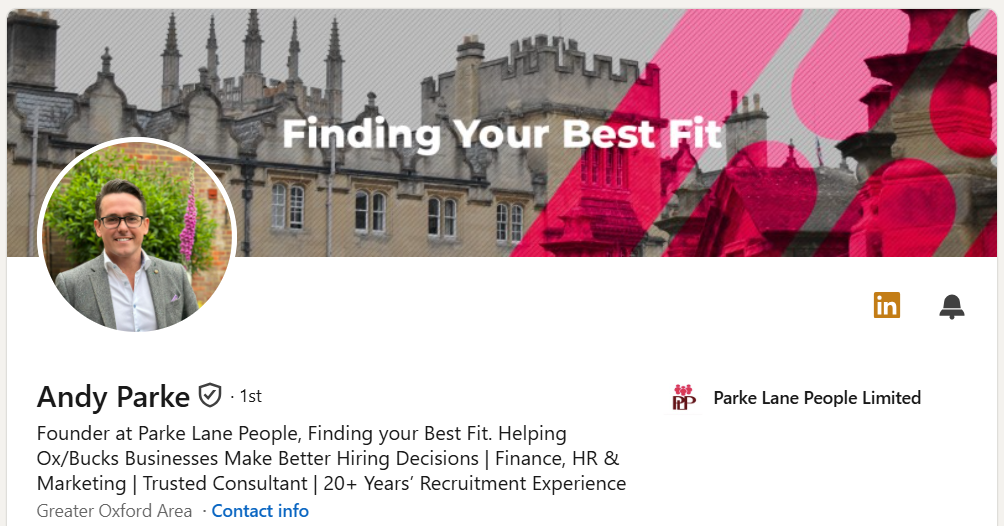
When Andy recently reviewed his own profile, he didn’t just update a few dates or add another role. Instead, he stepped back and asked himself a simple question:
“Does this still reflect who I am and how I help people today?”
One of the biggest changes was his headline.
Rather than simply describing his job title, it now explains the value he brings.
Helping Oxfordshire Businesses Make Better Hiring Decisions | Finance, HR & Marketing | Trusted Consultant | 20+ Years’ Recruitment Experience
It’s a subtle change, but an important one.
Within a few seconds, visitors understand who Andy helps, how he helps them and the experience he brings.
He also refreshed the opening of his About section.
“With more than 20 years’ recruitment experience, I’ve learnt something. The best recruitment isn’t really about recruitment. It’s about understanding where a business is today, where it wants to go and finding people who can help it get there.”
That short paragraph says far more than simply listing employers or years of experience.
It tells people how Andy thinks.
It demonstrates his approach.
Most importantly, it sounds like him.
When reviewing your own LinkedIn profile, ask yourself three simple questions:
- Does my headline explain the value I bring?
- Does my About section sound like me?
- Would somebody understand what makes me different within the first 30 seconds?
If the answer to any of those questions is “no”, it’s probably time for a refresh.
Know Where You Want to Go
Before updating your LinkedIn profile or CV, spend some time thinking about your next move.
It sounds obvious, but one of the biggest mistakes experienced professionals make is starting with the job search rather than the destination.
Before you look at job boards or speak to recruiters, ask yourself:
- What type of organisation do I genuinely want to work for?
- What kind of culture brings out my best work?
- What sort of leader do I want to work with?
- What challenges motivate me?
- What industries excite me?
- Where do I want my career to be in three to five years?
As your career progresses, success often becomes about much more than salary.
You may be looking for greater autonomy, the opportunity to mentor others, a better work-life balance or the chance to help shape the direction of a business.
Understanding what really matters to you will make every future decision easier.
It will help you identify the right opportunities, ask better interview questions and avoid accepting a role that looks attractive on paper but isn’t the right long-term fit.
At Parke Lane People, we often spend as much time discussing career aspirations with candidates as we do individual vacancies.
The best career moves are rarely accidental. They happen when talented people have a clear understanding of where they want to go and why.
Build a Profile That Tells Your Story
Once you know where you’re heading, it’s time to ensure your professional profile reflects the journey you’ve been on.
One of the biggest mistakes we see is professionals treating LinkedIn like an online CV.
It isn’t.
Your CV explains what you’ve done.
Your LinkedIn profile should explain who you are.
Think of your profile as the introduction to your professional story.
Instead of simply listing responsibilities, focus on the difference you’ve made.
Consider including examples of:
- Projects you’ve successfully delivered.
- Teams you’ve developed or mentored.
- Business improvements you’ve led.
- Cost savings or efficiencies you’ve introduced.
- Revenue growth or commercial success you’ve contributed towards.
- Problems you’ve solved.
- Qualifications or specialist expertise you’ve gained.
Senior appointments are rarely made because somebody can perform a task.
They’re made because someone can solve problems, lead people and make a positive impact on the business.
Don’t be afraid to quantify your achievements where possible.
Leading a team of 25 people, reducing operating costs by 15% or delivering a major transformation project tells a much stronger story than simply listing your responsibilities.
Remember, employers aren’t only interested in what your job title was.
They’re interested in the impact you made whilst you were there.
It’s also worth remembering that your LinkedIn profile and your CV should complement each other, not compete.
Your LinkedIn profile introduces your experience, values and personality.
Your CV provides the detail, demonstrating your achievements, career progression and commercial impact.
If your CV hasn’t been updated for a while, we’ve created a dedicated CV Writing Guide with practical advice on presenting your experience, achievements and leadership credentials more effectively.
👉 Read our CV Writing Guide
Build Relationships, Not Just Applications
One of the biggest misconceptions about LinkedIn is that it’s only useful when you’re looking for work.
The most successful professionals use it very differently.
They build relationships before they need them.
That might mean reconnecting with a former colleague, congratulating someone on a promotion, commenting thoughtfully on an industry article or introducing two people who could help one another.
None of those conversations are about asking for a job.
They’re about staying visible, adding value and building trust over time.
Networking isn’t about collecting connections or handing out business cards.
It’s about creating genuine professional relationships.
After more than 20 years in recruitment, Andy has seen many successful appointments begin with a conversation rather than a job application.
Sometimes a hiring manager remembers a candidate they met six months earlier. Sometimes a recommendation comes from a former colleague. Sometimes an opportunity arises because someone has consistently shared useful insights and stayed visible within their professional network.
Those opportunities don’t happen by accident.
They’re built through relationships.
That’s why LinkedIn shouldn’t be something you only visit when you’re updating your CV.
Spend a few minutes each week engaging with your network.
Share an article that caught your attention.
Congratulate someone on a new role.
Comment on industry developments.
Celebrate your team’s successes.
Support others.
These small interactions help people remember you for the right reasons.
When the right opportunity does arise, you’re no longer just another applicant.
You’re already a familiar and trusted professional.
Strengthen Your Credibility
Once your profile tells your story, spend a little time making sure it supports the professional image you want to project.
Fortunately, it doesn’t usually require a complete overhaul.
Small improvements can make a significant difference.
Take the opportunity to:
- Upload a recent professional photograph.
- Use a banner image that reflects your profession or industry.
- Review your headline and About section every year.
- Add relevant skills and professional memberships.
- Ask former managers, colleagues or clients for recommendations.
- Ensure your qualifications, certifications and contact details are up to date.
One feature that remains surprisingly underused is LinkedIn Recommendations.
A genuine recommendation from someone you’ve worked alongside often carries more weight than anything you could write about yourself.
If you’ve recently completed a successful project or worked closely with a manager or client, don’t be afraid to ask for one.
Likewise, consider writing recommendations for others.
Professional relationships work both ways, and taking the time to recognise someone else’s contribution often strengthens your own network too.
Audit Your Digital Footprint
If you’re applying for a senior role, it’s highly likely that someone will search your name online before inviting you to interview.
Before they do, spend ten minutes searching for yourself.
Review what appears on:
- Company biographies
- Industry websites
- Conference speaker pages
- News articles
- Other social media platforms
Ask yourself one simple question.
“Does this accurately represent the professional I am today?”
Perhaps you’ve changed sectors.
Perhaps you’ve been promoted several times since your biography was written.
Perhaps your LinkedIn profile still reflects a role you left years ago.
Your online presence should tell a consistent story.
Your LinkedIn profile, CV and digital footprint should all reinforce one another.
Consistency builds confidence.
Research Organisations Before You Apply
If there are organisations you’d genuinely like to work for, don’t wait until they advertise a vacancy before learning about them.
Start following them now.
Read their latest news.
Understand their values.
Follow their leadership team on LinkedIn.
Take an interest in the projects they’re working on and the challenges they’re facing.
This isn’t about trying to impress an interviewer.
It’s about deciding whether the organisation is genuinely the right fit for you.
The interview process works both ways.
You’re assessing them just as much as they’re assessing you.
By the time an opportunity becomes available, you’ll already have a far better understanding of the business, its culture and whether it’s somewhere you can see yourself thriving.
The strongest candidates don’t simply prepare for interviews.
They prepare for careers.
Prepare for Interviews Before You’re Invited
One of the best pieces of advice we can give is not to wait until you’ve been offered an interview before you start preparing.
The strongest candidates keep a record of their achievements throughout their career, making it much easier to demonstrate their experience when opportunities arise.
Think about the examples you would use to answer questions such as:
- Tell me about a time you led a team through change.
- Describe a challenging problem you’ve solved.
- What’s your biggest professional achievement?
- Tell me about a difficult stakeholder relationship.
- What commercial impact have you made?
Having these examples prepared means you’re telling genuine stories rather than trying to think of answers under pressure.
Remember, interviews are no longer simply about proving you can do the job.
At a senior level they’re about demonstrating leadership, commercial awareness, communication skills and cultural fit.
It’s equally important to prepare thoughtful questions of your own.
Ask about the company’s direction, leadership style, future plans and how success will be measured in the role.
An interview should feel like a professional conversation, not an interrogation.
If you’re looking for more practical interview advice, we’ve created a dedicated Interview Preparation Guide, covering everything from preparation and competency-based questions through to making a strong first impression.
👉 Read our Interview Preparation Guide
After the Interview
Many candidates believe the recruitment process ends when they walk out of the interview room.
In reality, some of the most important decisions are still to come.
A simple thank-you email can reinforce a positive impression.
Reflecting on the conversation while it’s still fresh can help you prepare for future interviews.
If appropriate, connecting with the interviewer on LinkedIn can also be a good way to maintain a professional relationship.
Then comes perhaps the biggest decision of all.
If you’re offered the role, how do you respond?
Should you negotiate?
Should you accept immediately?
What happens if your current employer makes a counter offer?
These situations can be difficult to navigate, particularly if emotions become involved.
While a higher salary can be tempting, it’s important to remember why you started looking for a new opportunity in the first place.
Career progression, culture, leadership and long-term development are often far more important than a short-term financial incentive.
We’ve created a dedicated guide to help you think through these situations before making a decision.
👉 Read our guide to Resignation & Counter Offers
Andy’s Perspective
“Updating my own LinkedIn profile reminded me that we all evolve professionally. The experience, skills and perspective we have today are often very different from those we had five years ago. Our LinkedIn profiles should evolve with us. Whether you’re actively looking for a new opportunity or simply keeping your profile up to date, make sure it reflects who you are today, not who you used to be.” Andy Parke

Andy’s Checklist
Before your next career move, spend an hour asking yourself these simple questions.
✓ Does my LinkedIn headline explain the value I bring?
✓ Does my About section reflect who I am today?
✓ Have I updated my key achievements?
✓ Have I added measurable results where possible?
✓ Have I asked for recent recommendations?
✓ Is my professional photograph current?
✓ Have I reviewed my online presence?
✓ Is my CV aligned with my LinkedIn profile?
✓ Am I building professional relationships before I need them?
You don’t need to do everything at once.
Even a small investment in your professional brand today could make a significant difference when the right opportunity comes along.
Further Reading
Alongside the guidance available here at Parke Lane People, the following organisations offer excellent resources for professionals looking to develop their careers.
Professional Career Resources
- National Careers Service – Career Advice, CV Guidance, Interview Advice
- CIPD Career Development
- ACCA Careers – Support for Accountancy and Finance Professionals
- CIMA Career Development
- Chartered Institute of Marketing (CIM) – Driving Better Marketing For You
Final Thoughts
At Parke Lane People, we believe your next career move doesn’t begin with your CV.
It begins with how you’re known professionally.
Your reputation.
Your relationships.
Your LinkedIn profile.
Your conversations.
Your willingness to keep learning.
Your personal brand is built over years, not days.
Invest in it consistently and opportunities often arrive before you start looking for them.
That’s exactly how many of the strongest Finance, HR and Marketing professionals we’ve worked with have built successful careers.
Whether you’re preparing for your next move now or simply future-proofing your career, taking the time to review your LinkedIn profile, strengthen your network and present yourself professionally is an investment that will continue to pay dividends.
After all, your next opportunity may begin long before you ever press Apply.
Coming Next
This is the first in what we hope will become a series of practical career guides from Parke Lane People, designed to help senior Finance, HR and Marketing professionals navigate every stage of their career journey.
In our next article, Writing a Senior CV That Opens Doors, we’ll share practical advice on presenting your achievements, leadership experience and commercial impact in a way that captures the attention of recruiters and hiring managers.